


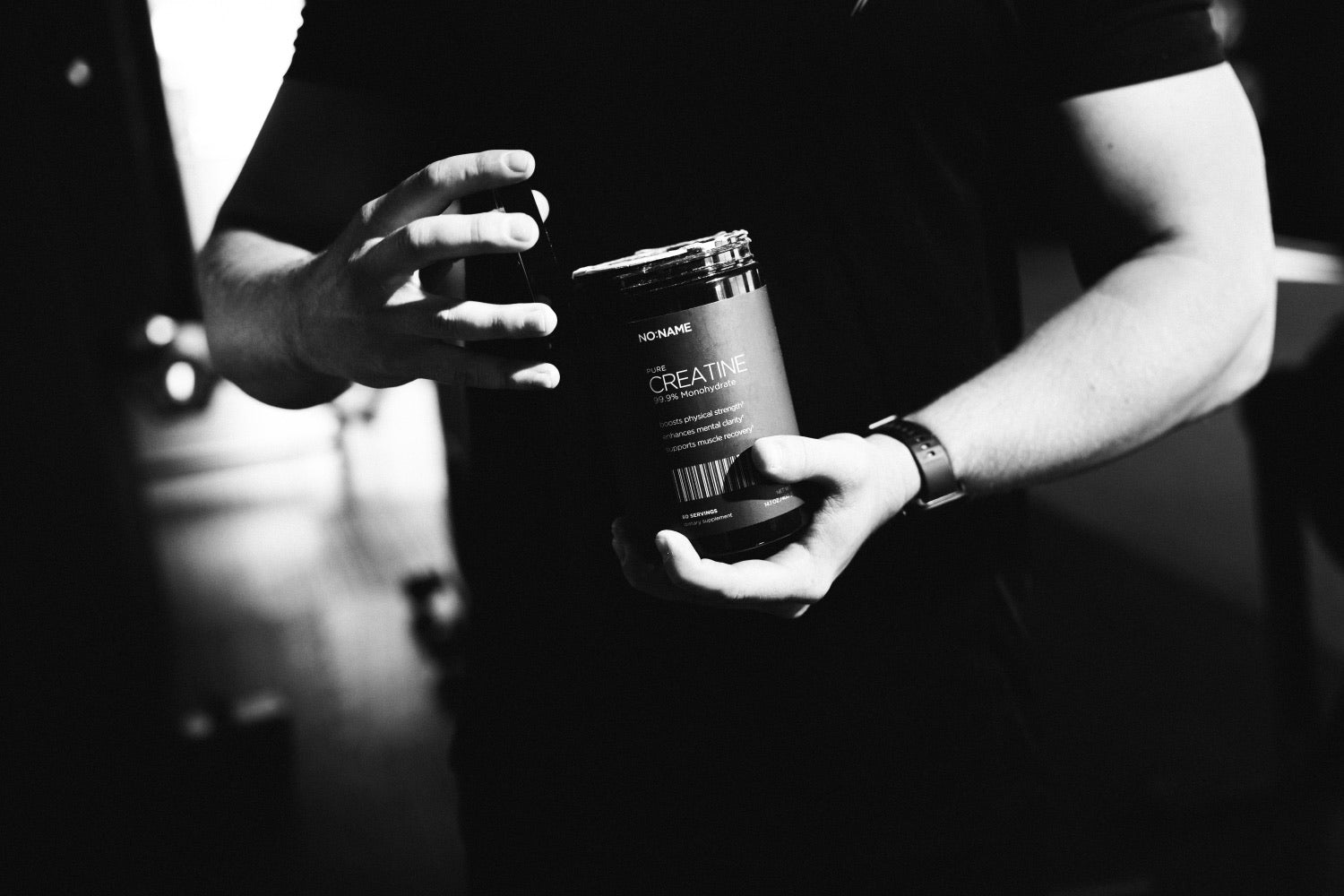
The standard comes first.
Built by athletes who wanted a clearer answer. What’s in it. Why it’s there. What stands behind it.

A clear purpose.
Know the job each formula is designed to do.
The formula in view.
Ingredients, serving sizes, and declared amounts.
Evidence you can inspect.
Product and lot context alongside the source.
We wanted better. So we built it.
We did not start with a plan to launch a supplement company. We started with frustration. As athletes, we kept running into vague labels, questionable ingredients, and empty promises.
We wanted to know what was in the formula, why it was there, and what stood behind it. That expectation became NO:NAME. Clear purpose. Formula in view. Room to make your own call.
If we would not confidently share it with family and friends, we would not offer it to you.

Before the bottle. Before the promise.
Raw-material testing is part of how we qualify the ingredients in our formulas. Our standard starts before an ingredient becomes part of a finished product.
Identity: what is it?
Identity testing asks whether a raw material is the ingredient it is represented to be. Results relate to the material and lot that were tested.
Purity: what was checked?
Purity testing looks for specified unwanted substances. The report should identify what was tested, the limits used, and the results.
Composition: what is in it?
Composition testing measures the makeup of a material. Its results apply to the components tested, using the methods listed on the report.
Different tests. Different answers.
Ingredient testing, finished-product analysis, and sport certification answer different questions. Here’s how to tell them apart.
01Raw-material testing
Examines an ingredient before it goes into a formula. It does not, by itself, verify every amount in a finished bottle or establish sport certification.
02Finished-product analysis
A certificate of analysis (CoA) reports results for a particular sample or batch. The test methods, measured properties, and limits determine what it establishes.
03Sport certification
A prohibited-substance screen concerns a specific product and lot. It is a different type of evidence from a complete finished-product CoA. Check the scope shown with the record.